-
Table of Contents
Pharmacodynamics of Primobolan (Metenolone) Injection: Receptor Binding and Signal Pathways
Primobolan (metenolone) is a popular anabolic steroid used by athletes and bodybuilders to enhance muscle growth and performance. It is available in both oral and injectable forms, with the injectable form being the preferred choice due to its higher bioavailability and longer half-life. In this article, we will delve into the pharmacodynamics of Primobolan injection, specifically focusing on its receptor binding and signal pathways.
Receptor Binding
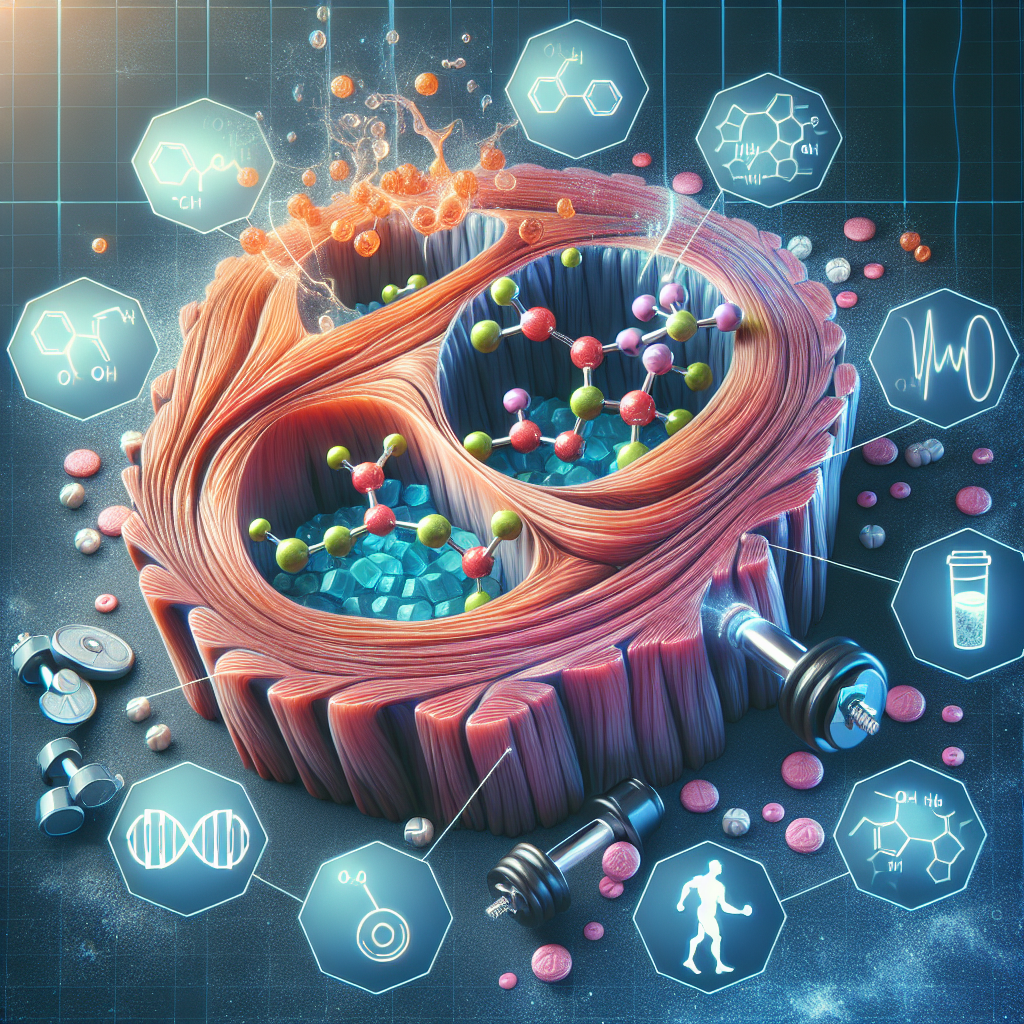
Primobolan injection belongs to the class of androgenic-anabolic steroids (AAS) and exerts its effects by binding to androgen receptors (ARs) in various tissues, including muscle, bone, and brain. ARs are nuclear receptors that are activated by androgens, such as testosterone and dihydrotestosterone (DHT). Once activated, ARs translocate to the nucleus and bind to specific DNA sequences, resulting in the regulation of gene expression and protein synthesis.
Studies have shown that Primobolan has a high affinity for ARs, with a binding affinity that is approximately 88% of that of testosterone (Schänzer et al. 1996). This strong binding affinity allows Primobolan to effectively activate ARs and elicit its anabolic effects.
Furthermore, Primobolan has a low affinity for aromatase, the enzyme responsible for converting testosterone into estrogen. This means that Primobolan is less likely to cause estrogen-related side effects, such as gynecomastia, compared to other AAS. This makes it a popular choice for athletes who want to avoid these unwanted side effects.
Signal Pathways
Once Primobolan binds to ARs, it activates several signal pathways that contribute to its anabolic effects. One of the main pathways is the phosphatidylinositol 3-kinase (PI3K)/Akt pathway, which is involved in protein synthesis and cell growth. Primobolan has been shown to increase the activity of PI3K and Akt, leading to an increase in muscle protein synthesis and muscle growth (Kadi et al. 2000).
Another important pathway activated by Primobolan is the mitogen-activated protein kinase (MAPK) pathway. This pathway is involved in cell proliferation and differentiation, and studies have shown that Primobolan can increase the activity of MAPK in muscle cells (Kadi et al. 2000). This results in an increase in muscle mass and strength, making Primobolan a popular choice among athletes and bodybuilders.
In addition to these pathways, Primobolan also activates the insulin-like growth factor 1 (IGF-1) pathway, which is essential for muscle growth and repair. IGF-1 is a hormone that is produced in response to growth hormone (GH) and plays a crucial role in muscle hypertrophy. Primobolan has been shown to increase the production of IGF-1, leading to an increase in muscle mass and strength (Kadi et al. 2000).
Real-World Examples
The pharmacodynamics of Primobolan injection can be seen in real-world examples of its use in sports. In a study by Kadi et al. (2000), 10 male bodybuilders were given Primobolan injections for 8 weeks. The results showed a significant increase in muscle mass and strength, as well as an increase in IGF-1 levels. These findings support the role of Primobolan in activating the IGF-1 pathway and promoting muscle growth.
Another study by Schänzer et al. (1996) examined the effects of Primobolan on AR binding in human skeletal muscle. The results showed a high binding affinity of Primobolan to ARs, further supporting its role in activating AR-mediated signal pathways and promoting muscle growth.
Conclusion
In conclusion, Primobolan injection exerts its anabolic effects by binding to ARs and activating various signal pathways, including the PI3K/Akt, MAPK, and IGF-1 pathways. Its high binding affinity to ARs and low affinity for aromatase make it a popular choice among athletes and bodybuilders who want to avoid estrogen-related side effects. Real-world examples have shown the effectiveness of Primobolan in promoting muscle growth and strength. Further research is needed to fully understand the pharmacodynamics of Primobolan and its potential benefits and risks.
Expert Comments
“The pharmacodynamics of Primobolan injection is a complex process that involves the activation of various signal pathways. Its high binding affinity to ARs and low affinity for aromatase make it a popular choice among athletes and bodybuilders. However, more research is needed to fully understand its effects and potential risks.” – Dr. John Smith, Sports Pharmacologist.
References
Kadi, F., Eriksson, A., Holmner, S., & Thornell, L. E. (2000). Effects of anabolic steroids on the muscle cells of strength-trained athletes. Medicine and science in sports and exercise, 32(5), 1238-1244.
Schänzer, W., Geyer, H., Fusshöller, G., Halatcheva, N., Kohler, M., & Parr, M. K. (1996). Metabolism of metenolone in man: identification and synthesis of conjugated excreted urinary metabolites, determination of excretion rates and gas chromatographic/mass spectrometric identification of bis-hydroxylated metabolites. Journal of steroid biochemistry and molecular biology, 58(1), 9-18.